


Cape Town’s hospitality and tourism industry generates more than R15 billion annually. Consequently, restaurants across the city are constantly hunting for reliable floor staff, creating strong demand for waiter jobs in Cape Town. This demand peaks dramatically between October and March, when international visitors flood the Mother City’s beaches, wine farms, and waterfront precincts.
During this window, hundreds of fresh waiter jobs in Cape Town open up almost overnight. Restaurants need extra hands for busy dinner services, weekend brunches, and cruise ship arrivals. Therefore, timing your job search around this seasonal surge dramatically improves your chances of success.
However, finding these opportunities isn’t always straightforward. Many listings on generic job boards are outdated or duplicated across multiple sites. That’s exactly why Jobenza.co.za exists: to connect job seekers with verified, current hospitality vacancies across every corner of the city.
This guide walks you through everything you need to succeed. Specifically, we’ll cover realistic salary expectations, the best neighbourhoods to target, and a proven playbook for beginners with no experience. In addition, you’ll get a step-by-step blueprint for applying, interviewing, and surviving your trial shift.
By the end of this guide, you’ll understand exactly where to look and how to present yourself. Let’s get started.
Understanding Waiter Salaries and Compensation in Cape Town
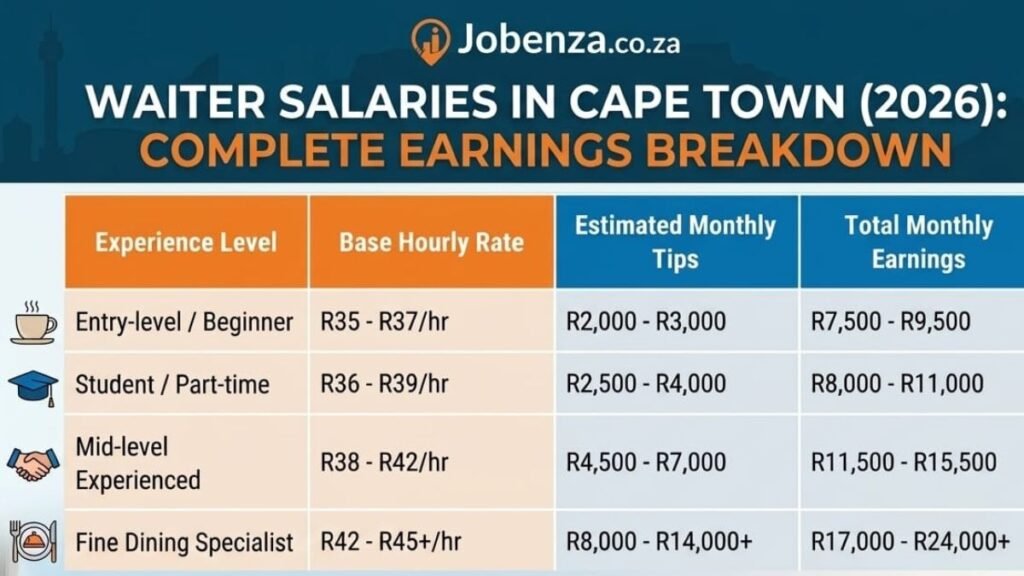
Base pay alone rarely tells the full story in Cape Town’s hospitality sector. Instead, total earnings depend heavily on tips, location, and experience level. The table below breaks down realistic monthly income across four common career stages.
| Experience Level | Base Hourly Rate | Estimated Monthly Tips | Total Monthly Earnings |
|---|---|---|---|
| Entry-level / Beginner | R35 – R37/hr | R2,000 – R3,000 | R7,500 – R9,500 |
| Student / Part-time | R36 – R39/hr | R2,500 – R4,000 | R8,000 – R11,000 |
| Mid-level Experienced | R38 – R42/hr | R4,500 – R7,000 | R11,500 – R15,500 |
| Fine Dining Specialist | R42 – R45+/hr | R8,000 – R14,000+ | R17,000 – R24,000+ |
Notably, these figures assume roughly 40-45 working hours per week. Consequently, part-time staff should adjust these numbers proportionally based on their actual shift count.
How South Africa’s Tipping Culture Works
South African restaurants generally operate two parallel tipping systems. Cash tips typically go directly to the individual waitron who earned them. Credit card tips, by contrast, usually get pooled and split among the whole floor team at the end of each shift.
This distinction matters enormously when evaluating a job offer. Therefore, always ask upfront whether tips are pooled or kept individually before accepting a position.
Pro Tip: Restaurants with transparent tip-pooling policies tend to have lower staff turnover. Ask about this policy directly during your interview.
Furthermore, tourist-heavy zones consistently outperform local suburban restaurants in tip earnings. Specifically, areas with high foreign currency spending can yield tips up to 40% higher than local family spots. This happens because international visitors, particularly from Europe and the US, tend to tip more generously by habit. Consequently, waitrons working in the Waterfront or Camps Bay often out-earn colleagues doing identical work in the suburbs.
Top Geographic Hotspots for Hospitality Jobs in Cape Town

Location dramatically shapes both your earning potential and your day-to-day work environment. Below, we break down Cape Town’s five major hospitality districts in detail.
V&A Waterfront & Green Point
Cruise liners dock here regularly, bringing waves of international visitors throughout the season. Consequently, V&A Waterfront vacancies rarely stay open for long during peak months. Restaurants in this precinct favour candidates who present professionally and communicate clearly in English. Green Point, situated just next door, offers slightly calmer sports bars and casual bistros. Therefore, it’s an excellent training ground before tackling the busier Waterfront strip.
Atlantic Seaboard: Camps Bay & Sea Point
This stretch of coastline houses some of Cape Town’s most prestigious dining venues. Specifically, Camps Bay restaurant waiter jobs in Cape Town span luxury beachfront fine-dining rooms and upscale cocktail lounges. Naturally, competition for these roles runs high, and grooming standards are strict. Sea Point, meanwhile, provides a gentler entry point with casual cafés lining its popular promenade. Consequently, many waitrons build experience in Sea Point before moving up to Camps Bay’s premium establishments.
City Bowl: Bree Street & Kloof Street
Cape Town’s City Bowl thrives on a completely different rhythm. Weekday corporate lunch rushes keep bistros busy, while evenings bring a buzzing bar and restaurant scene. Bree Street and Kloof Street, in particular, house trendy cafes and independent eateries known for creative menus. As a result, managers here often prioritise personality and menu knowledge over rigid formal training.
The Cape Winelands: Stellenbosch & Franschhoek
Further inland, the Cape Winelands offer a distinctly upscale hospitality experience. Premium wine estates and internationally recognised fine-dining rooms dominate this region. Specifically, Franschhoek has earned a reputation as South Africa’s food capital, hosting demanding but highly rewarding roles. Consequently, waitrons here need genuine wine knowledge and impeccable service etiquette. Nevertheless, the payoff includes some of the highest tips available outside the city centre.
Northern & Southern Suburbs: Claremont & Tygervalley
Finally, Cape Town’s suburban hubs offer a steadier, less seasonal alternative. High-volume family franchises like Spur, Panarottis, and John Dory’s anchor these areas year-round. Consequently, student jobs Cape Town seekers often find these suburbs ideal, since demand remains stable regardless of tourist season. In addition, public transport access here tends to be considerably easier than along the coastal hotspots.
How to Land Waiter Jobs in Cape Town with No Experience

Breaking into hospitality without prior experience feels intimidating at first. However, thousands of successful Cape Town waitrons started exactly where you are now.
Start one rung below the waitron role itself. Positions like food runner, sculler, or barback teach you the restaurant’s floor layout and workflow. Consequently, these roles remove pressure while you learn essential skills on the job. Most managers promote reliable runners into full waitron positions within just a few months.
Highlight your transferable soft skills clearly on your CV. Even without direct hospitality experience, everyday skills translate remarkably well:
- Stamina: standing jobs, sports, or physically active roles
- Emotional intelligence: handling difficult customers calmly and politely
- Numeracy: accurately processing cash, change, and bills
Therefore, don’t undersell experience from retail, tutoring, or babysitting roles. These all demonstrate genuine, relevant capability to hiring managers.
Leverage franchise training modules wherever possible. Groups like Spur and Panarottis run structured onboarding programmes covering food safety, POS systems, and service sequences. Consequently, completing one of these programmes gives beginners genuine credibility for future applications. Many franchise groups actively prefer training complete beginners, since they arrive without bad habits from other establishments.
Pro Tip: Mention directly in your application that you’re happy to start as a runner or trainee. This single line removes a manager’s biggest hesitation immediately.
Expect rejection along the way; it’s a normal part of the process. Nevertheless, persistence consistently pays off within a few weeks of consistent effort.
Step-by-Step Guide to Applying for Hospitality Vacancies
Successfully landing a role requires more than just submitting applications online. Follow these three execution phases for the best results.
Phase 1: Crafting an SA-Style Hospitality CV
Local hiring managers scan CVs quickly, so clarity matters enormously. Make sure yours includes:
- POS system knowledge, even basic exposure to till systems
- Clear references, ideally from a previous supervisor or teacher
- Neat presentation, with no spelling errors or cluttered formatting
- Availability details, specifically stating weekends and evening hours
- Contact information, including a working South African cellphone number
Keep your CV to a single page wherever possible. Busy managers rarely read beyond the first page anyway.
Phase 2: The Golden Window “Drop-In” Method
Online applications frequently get buried under hundreds of competing submissions. Consequently, physically visiting restaurants remains far more effective for securing interviews quickly. Specifically, aim to arrive between 15:00 and 17:00 on weekdays, the quiet window between lunch and dinner service.
During this window, managers are typically relaxed and genuinely willing to chat. Bring several printed CVs, dress neatly, and politely ask for the manager by name. Avoid visiting during meal-service rush hours, since you’ll likely be turned away without a proper conversation.
Phase 3: Crushing the Trial Shift

Most Cape Town restaurants test new candidates through an unpaid or lightly paid trial shift. Therefore, preparation here matters enormously for landing the permanent role.
- Attire: smart black trousers, non-slip closed shoes, minimal jewellery
- POS systems: ask a colleague to quickly demo GAAP or Micros beforehand
- Floor proactiveness: stay busy constantly, and never stand idle during quiet moments
- Attitude: smile consistently, and offer help outside your assigned section
Ultimately, managers watch your attitude and effort far more closely than technical perfection.
Legal Requirements and South African Labor Rights for Waitrons
Before starting any hospitality role, ensure your documentation is fully compliant. South African citizens need a valid SA ID or passport for payroll registration. Foreign nationals, meanwhile, must hold an active work permit explicitly permitting employment in South Africa. Tourist visas simply don’t qualify for legal hospitality work.
In addition, you’ll need a SARS tax number once your earnings cross the annual tax threshold. Most employers can assist with this registration process directly.
The Basic Conditions of Employment Act (BCEA) also protects waitrons regarding overtime pay and night shift allowances. Specifically, employees working beyond standard hours are entitled to additional compensation by law. Therefore, always keep a personal record of your actual hours worked each week.
Ready to put this knowledge into action? Head over to Jobenza.co.za right now and filter through the latest verified hospitality jobs Cape Town has to offer. Whether you’re searching for restaurant waiter jobs in Cape Town or your very first waitron role, Jobenza connects you directly with real, current opportunities across the entire city.
Conclusion
Cape Town’s thriving hospitality sector continues to create excellent opportunities for job seekers who are prepared, persistent, and ready to learn. Whether you’re applying for your first hospitality role or looking to advance your career, understanding seasonal hiring trends, salary expectations, and the best areas to target can give you a significant advantage. By following the strategies outlined in this guide and using trusted platforms like Jobenza.co.za to find verified waiter jobs in Cape Town, you’ll be well positioned to secure the right opportunity and build a rewarding career in one of South Africa’s busiest restaurant markets.