

Human Resources has moved from the back office to the boardroom. As South African companies navigate load-shedding logistics, hybrid workplaces, and stricter labour compliance, the demand for skilled HR professionals has never been higher. Whether you’re a graduate exploring entry-level HR opportunities or a seasoned practitioner eyeing a leadership role, understanding the current landscape of HR jobs in South Africa is the first step toward landing the right position. This guide breaks down everything you need to know — from salaries and certifications to interview tactics and where to find the best-vetted vacancies.
Quick Facts: HR Jobs in South Africa (2026 Snapshot)
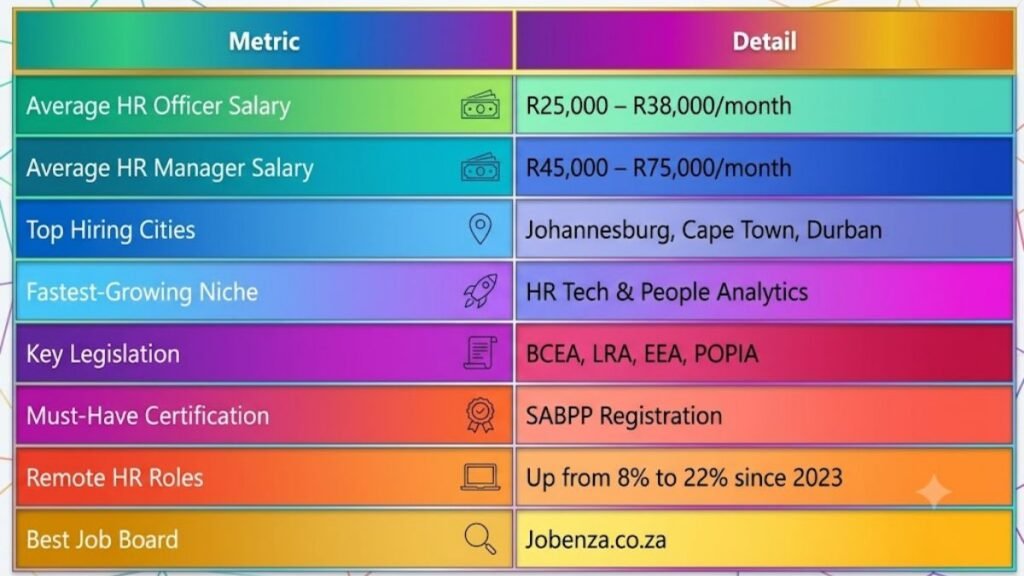
Why HR Is a Vital Role in South Africa Today
South Africa’s labour market is uniquely complex. Employers must balance the Basic Conditions of Employment Act (BCEA), the Labour Relations Act (LRA), Employment Equity targets, and POPIA data compliance — all while competing for scarce technical talent. This regulatory density means HR professionals are no longer just “people admins.” They are strategic partners who manage risk, drive transformation, and shape company culture.
Add to this the rise of hybrid work, generational shifts in the workforce, and growing scrutiny around fair labour practices, and it’s clear why organisations across every sector are actively recruiting for Human Resources jobs South Africa wide. For job seekers, this translates into genuine opportunity: HR is one of the few functions that touches every department, making it a resilient and future-proof career path.
Section 1: The HR Job Landscape in South Africa — City by City

HR hiring trends differ significantly depending on where you’re job hunting. Here’s how the three major metros compare.
Johannesburg: The Corporate and Mining Hub
Johannesburg remains the epicentre of corporate South Africa. With head offices for banking, mining, and manufacturing giants concentrated in Sandton, Rosebank, and Midrand, HR vacancies in Johannesburg tend to skew toward:
- Employee relations and labour law specialists
- HR Business Partners for large corporates
- Talent acquisition leads for financial services
- Mining sector HR (compliance-heavy roles involving union negotiations)
Johannesburg also has the highest concentration of HR Director and Executive roles, making it the top destination for professionals seeking career advancement.
Cape Town: Tech, Tourism, and Startups
Cape Town’s HR market is shaped by its booming tech and BPO (business process outsourcing) sectors. HR vacancies in Cape Town frequently include:
- People Operations roles at scale-ups and tech firms
- HR generalists in tourism and hospitality
- Culture and engagement specialists
- Remote-first People teams supporting global clients
Cape Town also leads in progressive HR practices, with many companies piloting four-day work weeks and flexible benefits structures.
Durban: Manufacturing and Logistics
Durban’s port-driven economy creates consistent demand for HR professionals skilled in industrial relations, particularly within manufacturing, automotive, and logistics. Roles here often require strong knowledge of union engagement and shift-based workforce management, alongside solid BCEA compliance experience.
Regional Snapshot
- Johannesburg: highest salaries, most senior roles, high competition
- Cape Town: fastest-growing tech/HR crossover roles, strong work-life balance culture
- Durban: steady demand, strong industrial relations focus, lower cost of living
Section 2: Salary Brackets and Skill Requirements
HR Salary Guide South Africa (2026)
Salaries vary by seniority, city, and industry. Use this as a benchmark when negotiating your next offer.
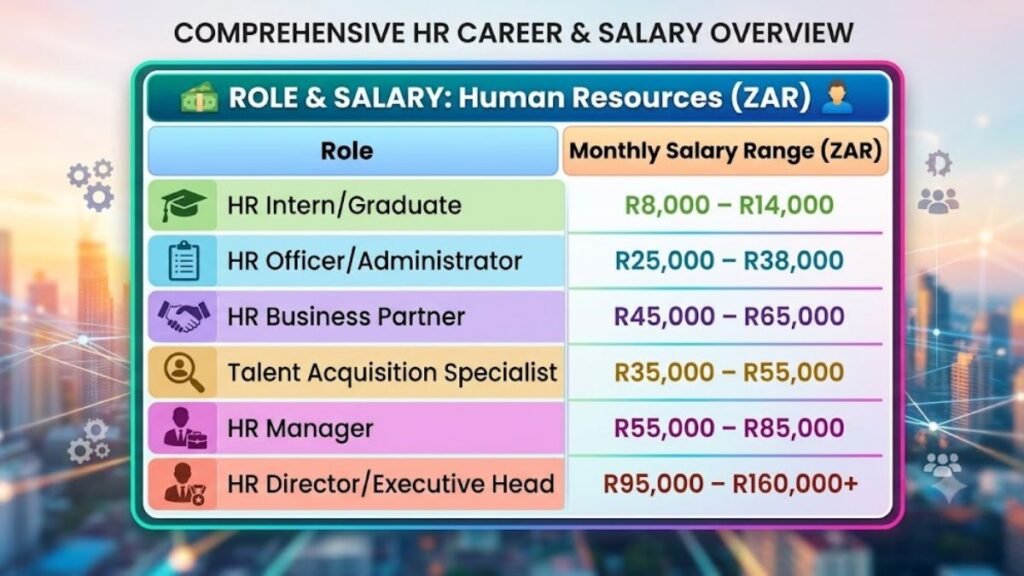
Johannesburg and Cape Town typically sit at the top of these ranges, while smaller cities and entry-level markets sit closer to the lower bound.
Must-Have Certifications in South Africa
Employers consistently prioritise candidates with recognised credentials. If you’re serious about long-term HR career growth SA-wide, consider these certifications:
- SABPP Registration – The South African Board for People Practices is the industry’s professional body; registration signals credibility to employers.
- National Diploma or Degree in HR Management – Still the baseline requirement for most mid-to-senior roles.
- CIPD Qualification – Internationally recognised and increasingly valued by multinational employers.
- Labour Relations short courses – Critical for roles involving CCMA representation or union negotiation.
- SAGE or SAP HR/Payroll certification – Highly sought after as companies digitise HR operations.
- People Analytics or HR Tech certificates – A fast-growing differentiator as data-driven HR becomes standard practice.
Core Skills Employers Want
- Strong grasp of labour relations and dispute resolution
- Recruitment strategies tailored to scarce-skills sourcing
- Change management experience
- Employment Equity and Skills Development reporting
- Emotional intelligence and conflict mediation
- Digital literacy across HRIS platforms
Section 3: How to Land an HR Job — The Practical Playbook
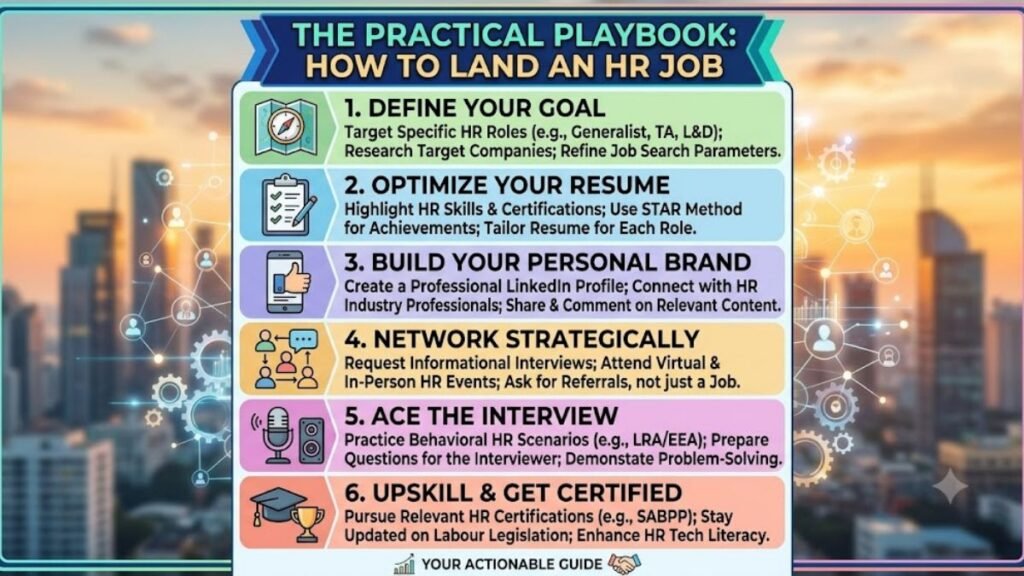
Resume Optimisation for HR Roles
Your CV is often screened by an Applicant Tracking System (ATS) before a human ever sees it. To pass this first filter:
- Use clear section headers (Experience, Education, Certifications)
- Mirror keywords from the job ad, such as “employee relations” or “recruitment strategies”
- Quantify achievements — for example, “reduced staff turnover by 18% in 12 months”
- Keep formatting simple; avoid tables and graphics that confuse ATS parsing
- List SABPP or CIPD registration numbers prominently near your name and contact details
Interviewing Tips for South African Firms
South African employers often blend technical questions with values-based and Employment Equity considerations. Prepare for this by:
- Researching the company’s transformation and B-BBEE commitments beforehand
- Practising STAR-method answers (Situation, Task, Action, Result) for behavioural questions
- Preparing a concrete example of handling a disciplinary or grievance case
- Asking informed questions about the company’s approach to hybrid work and employee wellness
- Being ready to discuss how you’d manage compliance under the BCEA and LRA in practical scenarios
Navigating Recruitment Agencies
Recruitment agencies remain a major channel for HR hiring in South Africa, but using them effectively requires strategy:
- Register with agencies that specialise in HR and people functions rather than generalist staffing firms
- Be transparent about salary expectations upfront to avoid mismatched placements
- Follow up politely every two to three weeks rather than daily
- Treat recruiters as long-term career partners, not one-time transaction points
- Always verify an agency’s legitimacy via the Association of Personnel Service Organisations (APSO)
Section 4: Future-Proofing Your HR Career
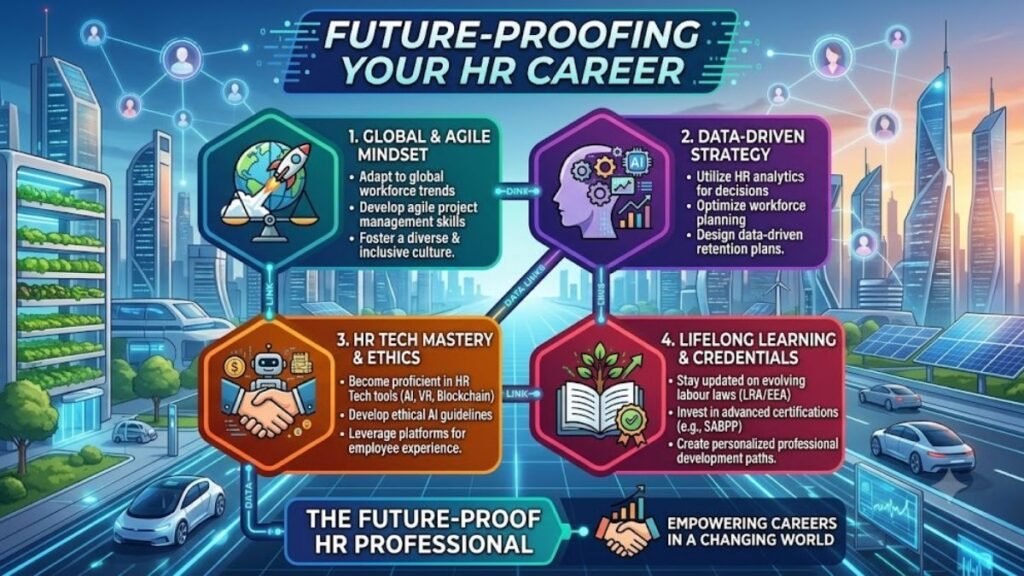
The Role of AI in HR
Artificial intelligence is reshaping HR functions across South Africa, from AI-powered CV screening to chatbot-driven onboarding. Rather than replacing HR professionals, AI is elevating the strategic side of the role. Practitioners who can interpret people-analytics dashboards, manage AI-assisted recruitment strategies, and ensure ethical AI use in hiring decisions will be the most in-demand candidates over the next five years.
Key AI-adjacent skills worth developing include:
- Basic data literacy and dashboard interpretation
- Understanding of algorithmic bias and fairness in hiring
- Familiarity with AI-enabled HRIS and applicant tracking platforms
- POPIA-compliant data handling practices
Remote Work Trends in SA
Remote and hybrid HR roles have grown substantially, particularly in Cape Town’s tech-driven employers and companies serving international clients. While manufacturing and industrial HR roles remain largely on-site due to their operational nature, corporate HR functions increasingly offer:
- Fully remote People Operations positions
- Hybrid HR Business Partner roles (2–3 days in-office)
- Remote-first recruitment and onboarding specialists supporting global teams
Candidates who can demonstrate strong self-management and digital collaboration skills have a distinct advantage in this growing segment.
Section 5: The Jobenza Advantage
Searching for HR jobs across scattered platforms wastes valuable time. The Jobenza job board solves this by curating verified, up-to-date HR vacancies from across Johannesburg, Cape Town, Durban, and beyond — all in one place.
Here’s why HR job seekers choose Jobenza:
- Curated listings — every HR vacancy is screened to filter out expired or duplicate postings
- City and salary filters — quickly narrow down HR vacancies in Johannesburg or Cape Town by your preferred pay bracket
- Entry-level to executive coverage — from graduate HR internships to Head of People roles
- Employer verification — reducing the risk of scam listings common on generic job sites
- Career resources — CV guidance and interview prep tailored to the South African market
If you’re serious about your next move, creating a profile on jobenza.co.za ensures you see new HR opportunities as soon as they’re posted, rather than competing with hundreds of latecomers on generic platforms.
Conclusion: Your Next Step Toward an HR Career in South Africa
The South African HR profession is evolving quickly, shaped by AI adoption, hybrid work, and ever-tightening labour compliance requirements. Whether you’re targeting entry-level HR opportunities or aiming for a Head of People role, success comes down to three things: staying certified, tailoring your applications to what South African employers actually want, and using the right channels to find verified vacancies.
Don’t leave your next career move to chance. Visit jobenza.co.za today, create your profile, and start applying to curated, verified HR jobs in South Africa — because the right opportunity shouldn’t be hard to find.
Frequently Asked Questions
What qualifications do I need for HR jobs in South Africa?
Most employers require a diploma or degree in Human Resources Management, with SABPP registration and CIPD certification giving candidates a competitive edge, especially for mid-to-senior roles.
What is the average HR salary in South Africa?
Salaries range from around R25,000 per month for HR Officers to R95,000+ for Directors, depending on city, industry, and experience level. Johannesburg and Cape Town typically offer the highest pay brackets.
Which city has the most HR job opportunities?
Johannesburg leads in volume and seniority of roles due to its concentration of corporate head offices, while Cape Town is the fastest-growing market for tech-driven People Operations positions.
Are there remote HR jobs available in South Africa?
Yes, remote and hybrid HR roles have grown significantly, particularly in tech, BPO, and companies serving international markets. Manufacturing and industrial HR roles remain largely on-site.
How can I find entry-level HR opportunities?
Start with HR internships, graduate programmes, and administrator roles. Platforms like Jobenza allow you to filter specifically for entry-level listings alongside experienced-hire positions.
What is SABPP and why does it matter?
The South African Board for People Practices is the professional registration body for HR practitioners in South Africa. Registration demonstrates professional credibility and is increasingly requested by employers.
How do I choose a good recruitment agency for HR roles?
Look for agencies registered with APSO (Association of Personnel Service Organisations) that specialise in HR placements, and be clear about your salary expectations from the first conversation.