


Searching for hotel jobs in Cape Town can feel overwhelming when you’re up against hundreds of applicants for every front desk or housekeeping vacancy. This guide breaks down exactly where the real opportunities are hiding, how to package yourself for South African hiring managers, and how to protect yourself from the scams that plague this industry. Whether you’re chasing your first role in hospitality careers in South Africa or eyeing a management position at a five-star resort, you’ll find a clear action plan below.
Why Cape Town’s Hospitality Industry Is Booming in 2026

Cape Town’s tourism numbers have continued climbing since international travel fully normalised, and that growth translates directly into staffing demand. Hotels, guesthouses, and serviced apartments across the metro are competing for reliable, well-presented staff, which means genuine Western Cape hotel vacancies are more plentiful than most job seekers realise. The trick is knowing which part of the city to target, because each precinct has a distinct hiring pattern.
The CBD: Corporate and Boutique Hotel Hub
The city centre is dominated by business travel, conferences at the Cape Town International Convention Centre, and a growing cluster of design-led boutique hotels. Hiring here tends to be steady year-round rather than sharply seasonal, and properties often value staff who can handle corporate guests, multilingual check-ins, and efficient turnaround during conference weeks. CBD hotels are a strong entry point if you want consistent hours rather than the feast-or-famine rhythm of purely leisure-driven properties.
V&A Waterfront: Tourism and Luxury Convergence
The Waterfront combines cruise ship arrivals, high-end retail, and some of the city’s most recognisable five-star hotels. Competition for roles here is fierce because the pay and tipping potential are strong, but turnover is also high due to seasonal fluctuations. If you’re targeting luxury resort jobs, building experience at a respected Waterfront property is one of the fastest ways to make your CV attractive to other high-end employers later.
Atlantic Seaboard: High-End Resort and Villa Staffing
Camps Bay, Clifton, and Bantry Bay host some of the country’s most exclusive guesthouses, boutique hotels, and private villas. This precinct often hires for smaller, highly personalised teams, meaning candidates with a genuine passion for guest experience and discretion tend to stand out more than those with purely technical skills. Villa and boutique roles here frequently pay a premium compared to larger chain hotels for equivalent experience.
Types of Hotel Jobs in Cape Town You Can Apply For
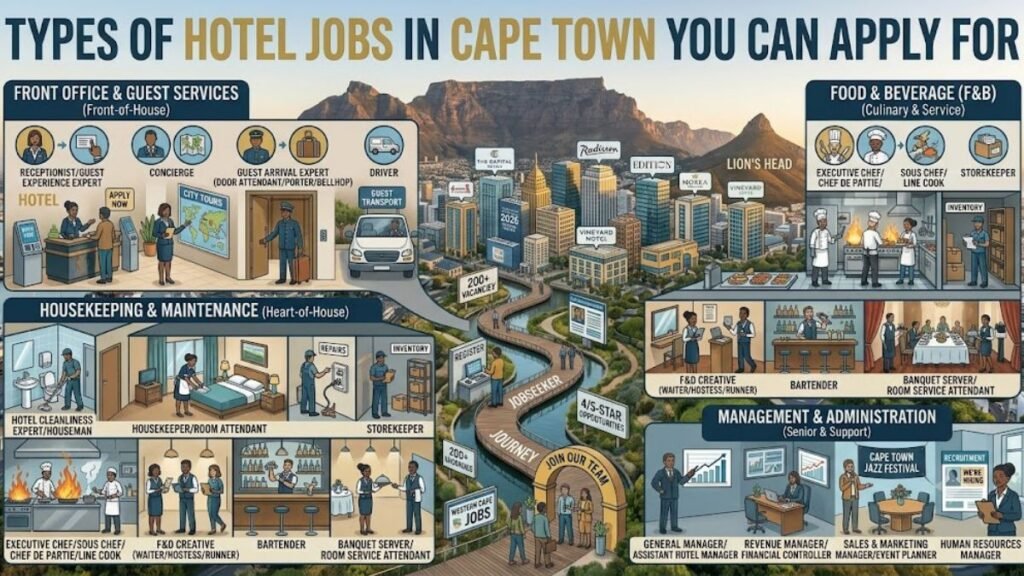
Before applying anywhere, it helps to understand the full spectrum of roles available across hospitality careers in South Africa, so you can target positions that match your current experience level rather than wasting applications on mismatched roles.
Entry-Level Hotel Jobs Cape Town: Where to Start
If you’re new to the industry, these roles typically require little to no prior experience and serve as a launchpad into the sector:
- Housekeeping attendant
- Kitchen steward or dishwasher
- Porter or bellhop
- Front office/reservations assistant
- Food and beverage runner
- Laundry attendant
Most entry-level hotel jobs Cape Town employers advertise require a matric certificate, basic English proficiency, and a willingness to work shifts, including weekends and public holidays.
Mid-Level and Specialist Roles
Once you’ve built a year or two of experience, or if you already hold relevant qualifications, these roles open up:
- Chef de Partie or Sous Chef
- Guest relations officer
- Duty manager
- Events and banqueting coordinator
- Revenue or reservations manager
- Sommelier or bar supervisor
Luxury Resort Jobs and Management Careers
At the top end of the ladder sit senior positions that combine operational expertise with people leadership:
- General Manager
- Food & Beverage Director
- Executive Housekeeper
- Spa Director
- Front Office Manager
- Executive Chef
These luxury resort jobs typically require formal hospitality qualifications, a proven track record, and several years managing teams under pressure.
Hotel Jobs in Cape Town: Skills vs. Salary Table
Salary ranges vary by property size, star rating, and location, but the table below gives a realistic benchmark for planning your job search and salary negotiations.
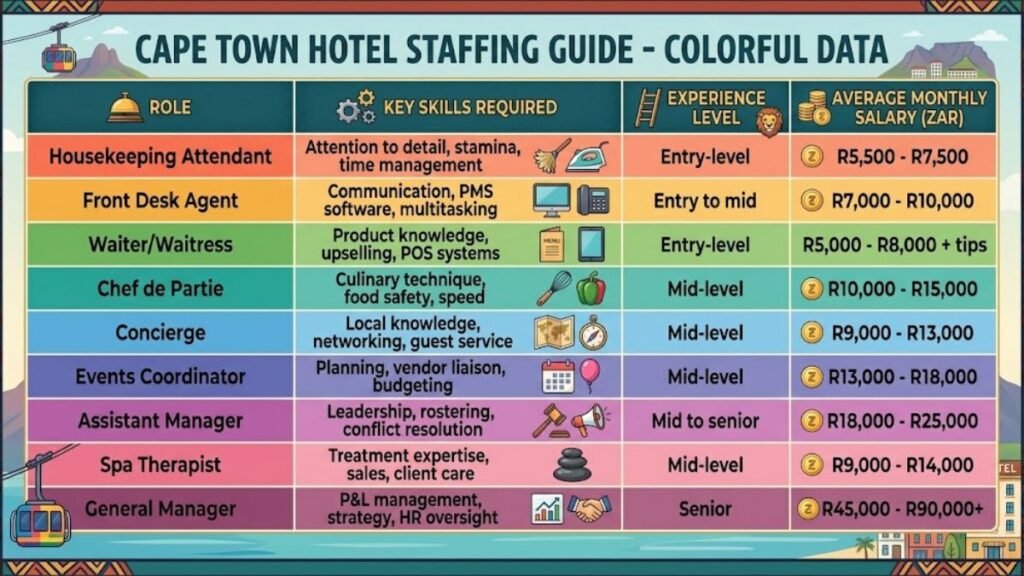
Use this table as a negotiating reference, but always cross-check against the specific property’s star rating and location before accepting an offer.
How to Write a Winning CV for the South African Hospitality Market
Hospitality recruiters in Cape Town skim CVs in under a minute, so structure and clarity matter more than creative design.
Structure and Formatting
Keep your CV to two pages maximum. Lead with a short professional summary that states your target role and years of experience. Follow with a reverse-chronological work history, listing your job title, employer, dates, and three to five bullet points of measurable achievements rather than vague duties. Close with education, relevant certificates (such as food safety or first aid), and language proficiencies, which matter significantly given Cape Town’s international guest base.
Common CV Mistakes to Avoid
- Listing responsibilities instead of results (“Handled check-ins” versus “Processed 40+ daily check-ins with zero guest complaints”)
- Omitting contact details or using an unprofessional email address
- Including irrelevant personal information such as marital status or ID number
- Submitting a generic CV to every vacancy without any tailoring
- Failing to mention shift flexibility, which is a major filter for hotel employers
Tailoring Your CV for Each Application
Read the job advert carefully and mirror its language where genuine. If the listing emphasises “guest experience” or “POS systems,” make sure those exact terms appear in your CV where truthfully applicable. Many properties and agencies use basic keyword scanning before a human ever reads your application, so this small step meaningfully improves your callback rate.
Acing the Hotel Job Interview in Cape Town
Once your CV lands an interview, preparation becomes the deciding factor between you and equally qualified candidates.
Before the Interview
Research the specific property, not just the brand. Know its star rating, target guest market, and any recent renovations or awards. Prepare two or three specific examples from your own experience that demonstrate problem-solving under pressure, since hospitality interviews lean heavily on situational questions.
During the Interview
Dress in neat, conservative business attire regardless of the role level, as grooming standards are taken seriously in this industry. Arrive fifteen minutes early. Expect questions such as “Describe a time you handled a difficult guest” or “How do you prioritise tasks during a fully booked weekend?” Answer using a brief situation, your specific action, and the measurable outcome.
Follow-Up Etiquette
Send a short thank-you email within 24 hours reaffirming your interest and one key strength you discussed. This simple habit is rare among candidates and leaves a lasting positive impression on hiring managers.
How to Spot Fake Hotel Job Scams
Unfortunately, hospitality recruitment attracts scammers who exploit job seekers’ urgency. Protecting yourself is essential.
Red Flags to Watch For
- Requests for upfront payment for “training,” “uniforms,” or “registration fees”
- Interviews conducted entirely over WhatsApp with no verifiable company details
- Job offers extended without any interview at all
- Salaries that seem significantly above market rate for the stated role
- Poor grammar, generic email domains, or mismatched company names on offer letters
How to Verify a Legitimate Employer
Cross-check the hotel’s name against its official website and LinkedIn page. Call the property directly using a number from its official site, not the one provided in the suspicious message. Never share banking details, ID copies, or pay any fee before signing a legitimate, dated employment contract on company letterhead.
Tapping into the Hidden Job Market for Hotel Jobs in Cape Town

Many Western Cape hotel vacancies are filled before they’re ever publicly advertised. Accessing this hidden market gives you a real edge.
Approaching Hotels Directly
Identify five to ten target properties and visit or email their HR departments directly with a tailored CV and cover note, even without a live vacancy. Many hotels keep a “talent pool” for future openings and prioritise candidates who showed initiative.
Networking on LinkedIn
Follow Cape Town hotel groups and connect with their HR managers and department heads. Engage genuinely with their posts before reaching out, then send a concise, personalised message expressing interest in future openings. This approach consistently outperforms cold applications.
Working with Recruitment Agencies
Hospitality-focused recruitment agencies often have exclusive relationships with properties that never post public adverts. Register with two or three reputable Cape Town agencies, keep your CV updated with them, and follow up periodically rather than assuming they’ll remember you after one submission.
Where to Find Hotel Jobs in Cape Town Online
Beyond networking, a reliable job board saves you hours of scattered searching. jobenza.co.za is worth bookmarking as a go-to resource because it lists hotel jobs in Cape Town and across the Western Cape with daily updates, making it easier to catch new vacancies before the applicant pool grows too large. Pairing a strong daily habit of checking a dedicated platform like this with the direct-approach and networking strategies above gives you the broadest possible coverage of the market.
Know Your Rights: Labour Law Basics for Hotel Staff in South Africa
Understanding your legal protections is essential once you secure a role.

Basic Conditions of Employment
The Basic Conditions of Employment Act sets minimum standards covering working hours, overtime pay, annual leave, sick leave, and notice periods. Hotel staff working night shifts or public holidays are entitled to specific premium pay or time off in lieu, and employers are legally required to provide a written contract.
Sectoral Determination for Hospitality
The hospitality sector has historically been covered by specific wage determinations and bargaining council agreements that set minimum wage thresholds above the general national minimum wage in some cases. Always confirm the current applicable minimum wage for your specific role and region before accepting an offer.
What to Do If Your Rights Are Violated
If an employer withholds pay, refuses leave, or terminates you unfairly, you can lodge a complaint with the Commission for Conciliation, Mediation and Arbitration (CCMA) free of charge. Keep copies of your contract, payslips, and any written communication as evidence.
Building a Long-Term Career in Hospitality
Landing your first role is just the beginning of a career that can lead to genuinely senior positions within a decade.
Upskilling and Certifications
Consider short courses in food safety (HACCP), wine service, front office systems (such as Opera PMS), or a recognised hospitality diploma. Many hotel groups also offer internal training programmes, so ask about development opportunities during your interview.
Career Progression Paths
A typical trajectory moves from entry-level operational roles into supervisory positions within two to three years, then into departmental management within five to seven years for motivated staff who actively seek additional responsibility and training.
Frequently Asked Questions
Do I need experience for entry-level hotel jobs in Cape Town?
Most entry-level roles require no prior experience, though a matric certificate and reliable references are usually essential.
What’s the best time of year to apply?
August through October is ideal, as properties ramp up staffing ahead of the busy summer season.
Are hotel jobs in Cape Town seasonal?
Some are, particularly at Atlantic Seaboard leisure properties, while CBD and conference-focused hotels tend to offer more stable, year-round employment.
Final Thoughts
Breaking into hotel jobs in Cape Town takes more than a generic application. Match your CV and approach to the specific precinct and property type you’re targeting, verify every opportunity before sharing personal information, and combine daily job board checks with direct outreach and networking. With a clear strategy and persistence, Cape Town’s thriving hospitality sector offers a genuinely rewarding long-term career path.