
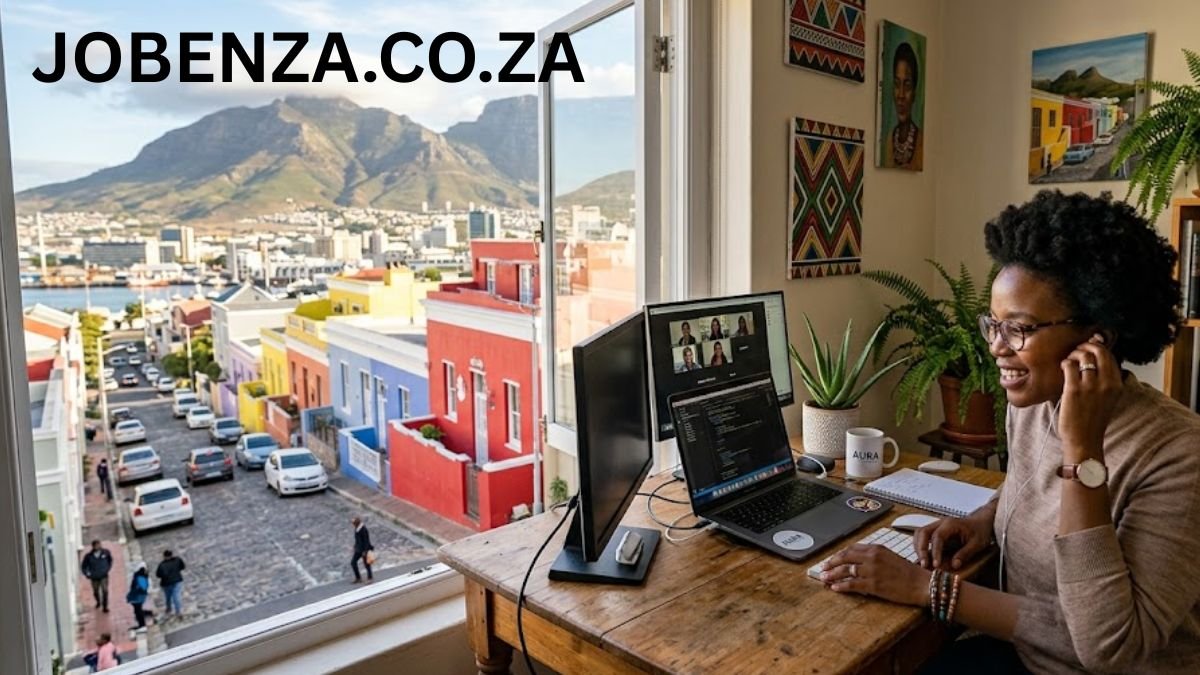
The Mother City has quietly become one of Africa’s most desirable remote work hubs, and the numbers back it up. If you’ve been scrolling job boards at midnight wondering whether the freedom of working from a coffee shop in Kalk Bay or a garden studio in Constantia is actually achievable, the answer is yes. Remote jobs in Cape Town have exploded in availability over the past two years, driven by global companies embracing distributed teams and local tech startups realising that talent doesn’t need to sit in an office to deliver results. Whether you’re a fresh graduate, a career-changer, or a seasoned professional tired of the N1 traffic grind, this guide unpacks exactly how to find, land, and thrive in a remote role based in or around Cape Town.
This isn’t another generic listicle. We’re going deep into the practical realities of South African remote work: the load-shedding contingency plans you actually need, which fibre providers won’t let you down mid-client-call, how SARS views your freelance income, and which platforms are worth your time versus which ones waste it. By the end, you’ll have an actionable roadmap, not just inspiration.
Why Cape Town Is Becoming South Africa’s Remote Work Capital

Cape Town’s appeal isn’t accidental. The city combines a lower cost of living than Johannesburg’s northern suburbs, a timezone that overlaps neatly with European business hours, and a lifestyle that global employers increasingly use as a selling point when recruiting internationally distributed talent. For companies hiring across remote jobs South Africa wide, Cape Town candidates are often prioritised because of strong English proficiency, solid infrastructure in key suburbs, and a mature freelance culture.
Beyond geography, the shift is structural. Global businesses cut office costs during the pandemic and never fully reversed course. Local companies followed suit, particularly in tech, finance, and customer support sectors. Today it’s entirely normal to see a Cape Town-based project manager working for a Berlin startup, or a Woodstock-based developer contracting to a New York fintech firm, all without ever stepping into a formal office.
The Rise of Hybrid Work Models
Not every company has gone fully remote, and that’s worth understanding before you set your expectations. Many Cape Town employers now offer hybrid work models, requiring anywhere from one to three days in-office per week. This middle-ground approach suits businesses that want collaborative energy without demanding a five-day commute. If you’re searching for flexibility rather than 100% remote work, filtering for hybrid roles widens your options considerably and often speeds up the hiring process, since employers view hybrid candidates as lower-risk hires.
The Industries Leading Cape Town’s Remote Job Boom

Not all sectors are equal when it comes to remote opportunity. Some industries have fully embraced distributed teams, while others are still catching up.
Tech and software development sit firmly at the top. Cape Town’s startup ecosystem, centred around areas like Woodstock, the Foreshore, and Observatory, has produced a steady stream of tech startup careers spanning software engineering, DevOps, UX design, and product management. These companies compete globally for talent, so they’ve had to offer remote flexibility just to stay competitive.
Digital marketing is another standout. Businesses worldwide need content, SEO, paid media, and social strategy executed consistently, and remote digital marketing roles based in Cape Town have surged as agencies and in-house teams realise marketers can manage campaigns from anywhere with a stable connection. Copywriters, SEO specialists, PPC managers, and social media strategists are all in high demand.
Customer experience is quietly one of the biggest categories. Remote customer service jobs now account for a significant share of postings, with international companies in retail, SaaS, and travel outsourcing support functions to Cape Town-based agents who work Western timezone shifts from home. These roles typically require reliable internet, a quiet workspace, and strong spoken English, all of which Cape Town candidates deliver in abundance.
Administrative and back-office work has also moved online en masse. Remote data entry jobs, virtual assistance, bookkeeping, and transcription roles are ideal entry points for people new to remote work, requiring minimal specialised equipment and offering flexible hours that suit parents, students, and career-changers alike.
Finally, finance, HR, and recruitment functions are increasingly distributed, with payroll administrators, recruiters, and financial analysts now working entirely from home for both local and international employers.
Where to Actually Find Remote Jobs: A Platform Comparison
Not all job boards are created equal, and wasting hours on the wrong platform is one of the biggest frustrations job seekers report. Here’s an honest breakdown of where to focus your energy.
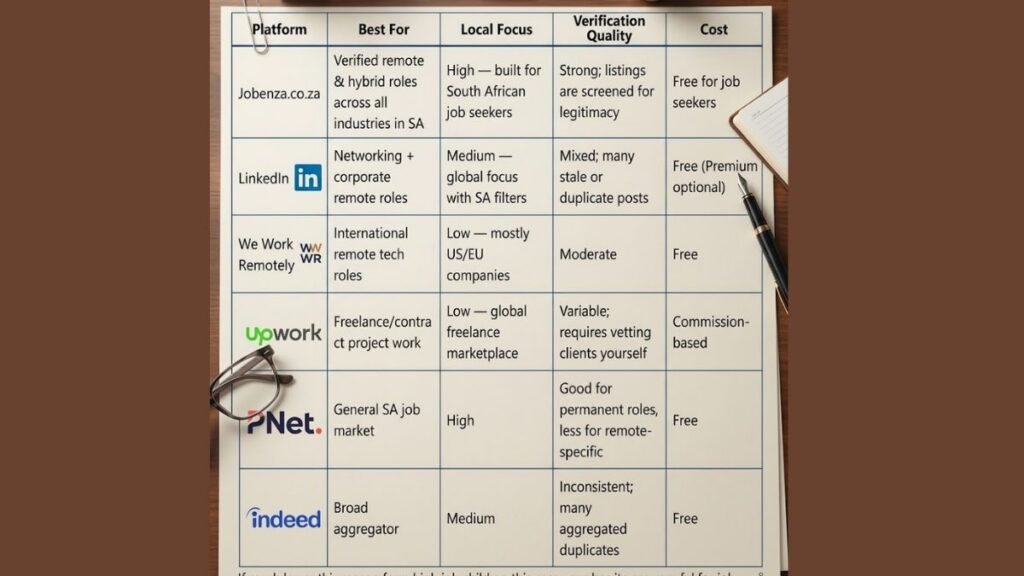
If you take one thing away from this table, let it be this: aggregator sites are useful for volume, but freelance platforms South Africa professionals actually trust for consistent, verified opportunities are far fewer than the internet suggests. This is precisely why Jobenza.co.za has built its reputation around curating legitimate listings rather than scraping the entire internet and hoping for the best. Every posting is checked, so you spend your time applying rather than dodging scams.
A Step-by-Step Guide to Landing a Remote Job in Cape Town
Finding the right role is only half the battle. Here’s a practical sequence to follow.
- Audit your home setup first. Before you even apply, make sure you have a dedicated workspace, a reliable chair and desk, and a backup plan for internet and power outages. Employers ask about this in interviews more often than you’d expect.
- Build a remote-ready CV. Highlight previous remote or freelance experience explicitly, even if it was informal. Mention specific tools you’re comfortable with, such as Slack, Zoom, Asana, Trello, or Google Workspace.
- Create a portfolio or work samples page. This matters enormously for marketing, design, writing, and development roles. A simple Notion page or personal website showcasing three to five strong examples outperforms a generic CV every time.
- Search with precision. Use exact-match searches like “remote jobs Cape Town” alongside broader terms, and set up job alerts on Jobenza.co.za so new verified listings land in your inbox the moment they’re posted.
- Tailor every application. Generic cover letters get ignored. Reference the specific company’s product, mission, or recent news in your application to show genuine interest.
- Prepare for video interviews properly. Test your lighting, background, and internet connection beforehand. Have a backup mobile hotspot ready in case load-shedding strikes mid-interview.
- Negotiate with confidence. Remote roles paying in USD, GBP, or EUR are common for South African contractors. Understand the exchange rate implications and negotiate a rate that reflects your skill level, not just local market averages.
- Clarify tax and invoicing expectations early. Ask whether you’ll be treated as an employee, an independent contractor, or a freelancer, since this affects your tax obligations significantly.
Solving South Africa’s Unique Remote Work Challenges
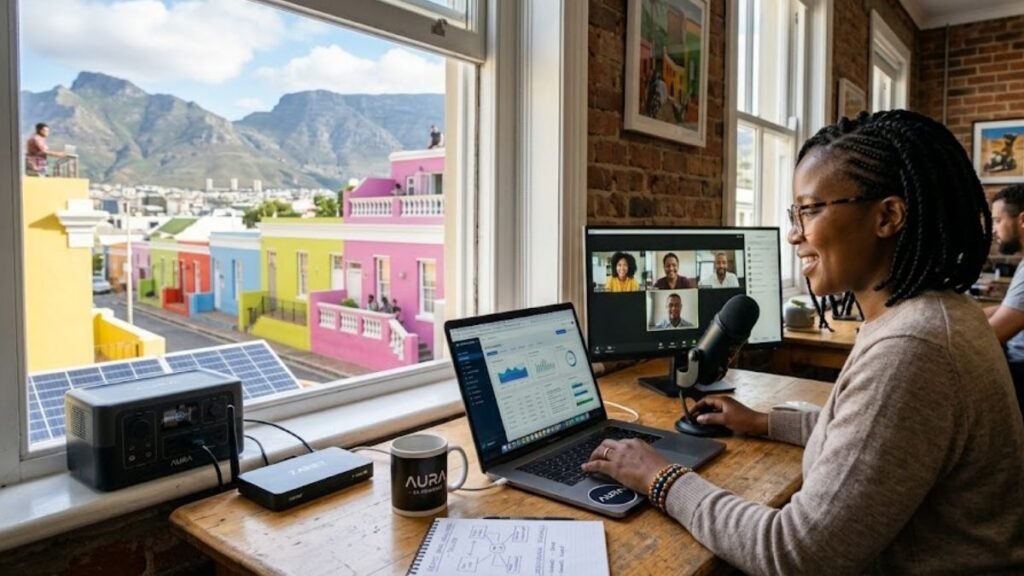
This is where most generic remote work guides fall flat, because they’re written for American or European audiences who don’t deal with rolling blackouts or unreliable fibre installations. Let’s fix that.
Load-Shedding: Your Biggest Productivity Threat
Load-shedding remains the single biggest disruptor for Cape Town remote workers. The good news is the city has responded with a genuine boom in resilient co-working spaces. Areas like Woodstock and Green Point now host several co-working venues running on solar power, battery backup systems, or generators specifically to keep freelancers and remote employees online during outages. If your home setup doesn’t have backup power, budgeting for a day pass at one of these spaces during high-stage load-shedding periods is far cheaper than losing a client over a missed deadline.
For a more permanent solution, many remote workers are investing in UPS (uninterruptible power supply) units for their routers and laptops, which buy you thirty minutes to a few hours of connectivity even when the grid goes down. It’s a small upfront cost that pays for itself the first time you avoid missing an important call.
Choosing the Right Fibre Provider
Internet reliability makes or breaks your remote career. Providers like Octotel and Frogfoot have become popular infrastructure choices across Cape Town suburbs because of their expanding coverage and generally stable uptime, but coverage varies block by block. Before signing a lease or committing to a suburb, check fibre coverage maps for your specific address, and where possible, choose an internet service provider offering uncapped, low-contention lines rather than the cheapest promotional deal. A second backup option, such as a mobile data SIM or 5G router, is worth the extra few hundred rand per month for the peace of mind alone.
Understanding SARS and Independent Contractor Tax
If you’re working remotely as an independent contractor, whether for a local company or an international one, SARS tax compliance is not optional. You’re generally required to register as a provisional taxpayer if your freelance or contract income isn’t taxed at source through PAYE. This means submitting provisional tax returns twice a year and keeping meticulous records of income and deductible expenses, including your home office costs, internet, and equipment.
Many new remote workers underestimate this obligation until they receive an unexpected tax bill. It’s worth consulting an accountant early, particularly if you’re being paid in foreign currency, since exchange rate fluctuations and offshore payment platforms like Wise, Payoneer, or Deel add complexity to your tax filings. Getting this right from day one saves enormous stress later.
Which Local Companies Are Actually Hiring Remotely
South Africa’s remote hiring landscape spans far beyond the usual suspects. Fintech companies across Cape Town’s growing payments and banking-tech sector regularly hire remote developers, compliance officers, and customer support agents. E-commerce businesses, particularly those selling into international markets, need remote-friendly marketing, logistics coordination, and customer service staff who can work flexible hours aligned with overseas customers. Business process outsourcing (BPO) firms based in Cape Town have also expanded their remote agent programmers significantly, offering work from home jobs Cape Town residents can start with minimal previous experience, provided they pass language and typing assessments.
Software consultancies and digital agencies round out the picture, frequently hiring remote-first for roles in web development, UI/UX design, and digital strategy, since their client base is often international and project-based rather than tied to a physical office.
Rather than cold-applying to dozens of individual company websites, the smarter approach is checking a single trusted aggregator that already tracks which of these companies are actively hiring. This is exactly the gap Jobenza.co.za fills for South African job seekers, consolidating verified openings from fintech, e-commerce, BPO, and agency employers into one searchable, up-to-date board.
Ready to Start Your Remote Career Search?
If you’ve read this far, you’re clearly serious about making the shift to remote work. Don’t let another week pass scrolling through outdated listings or applying to ghost jobs that never respond. Head over to Jobenza.co.za right now to browse actively verified remote and hybrid positions across tech, marketing, customer service, and admin roles. Create your profile, set up job alerts, and apply directly to opportunities built specifically for South African talent. Your next role could be one application away.
Common Mistakes That Sabotage Remote Job Applications

Even qualified candidates undermine their own chances through avoidable errors. Applying with a CV formatted for in-office roles, without mentioning remote-specific skills like self-management, async communication, or time-zone coordination, signals to employers that you haven’t thought through what remote work actually demands. Similarly, failing to mention your internet backup plan or workspace setup during interviews raises red flags for employers who’ve been burned before by candidates who disappear during outages.
Another common mistake is applying broadly without research. Remote roles often receive hundreds of applications, so a tailored, specific application referencing the company’s actual product or mission stands out dramatically more than a copy-paste cover letter. Finally, many candidates undervalue themselves when negotiating international contracts, accepting local salary benchmarks for roles that pay significantly more when quoted in USD, GBP, or EUR. Research typical rates for your role and region before entering salary discussions.
Frequently Asked Questions
Are remote jobs in Cape Town legitimate, or mostly scams?
Legitimate remote roles are abundant, but so are scams, particularly ones asking for upfront payment or personal banking details before an offer is made. Stick to verified platforms like Jobenza.co.za, cross-check company details independently, and never pay money to “secure” a job.
Do I need a degree to get a remote job in Cape Town?
Not necessarily. Many entry-level remote roles, particularly in customer service, data entry, and virtual assistance, prioritise skills, reliability, and communication ability over formal qualifications. Tech and specialised marketing roles typically do require relevant experience or certifications, though a degree isn’t always mandatory.
How much can I realistically earn working remotely from Cape Town?
This varies enormously by role and whether you’re paid in rand or foreign currency. Entry-level remote admin or customer service roles often start around R8,000 to R15,000 monthly, while experienced developers, marketers, or consultants working for international clients can earn significantly more, sometimes several times the local market rate when paid in USD or GBP.
What equipment do I need to start working remotely?
At minimum, a reliable laptop, stable internet connection, a quiet workspace, and a backup power or connectivity solution for load-shedding. Some roles may require specific software licenses or a second monitor, which employers sometimes provide as a hiring incentive.
How do I handle tax as a remote freelancer in South Africa?
Register as a provisional taxpayer with SARS if your income isn’t taxed at source, keep detailed records of income and business expenses, and consider consulting an accountant, particularly if you’re paid internationally. Home office expenses, a portion of your internet bill, and equipment costs may be deductible.
Is it better to work for a South African company or an international one remotely?
Both have advantages. Local companies typically offer more straightforward tax and payment arrangements, while international employers often pay significantly higher rates but require more diligence around invoicing, currency conversion, and tax compliance. Your choice should depend on your risk tolerance and financial planning comfort level.
What’s the difference between remote, hybrid, and freelance work?
Remote roles are typically full-time positions performed entirely outside a traditional office. Hybrid roles combine in-office and at-home work on a set schedule. Freelance work is project-based and self-employed, offering more flexibility but less income stability and no standard employee benefits.
Final Thoughts: Your Remote Career Starts Now
Cape Town’s remote job market has matured far beyond the pandemic-era experiment it once was. Between thriving tech startups, expanding customer service operations, and a growing freelance economy, opportunity is genuinely abundant for those willing to search strategically and prepare properly. The challenges are real, from load-shedding to tax compliance, but none of them are insurmountable once you know how to plan around them.
The difference between job seekers who land great remote roles and those who stay stuck scrolling endlessly usually comes down to where they search and how prepared they are when opportunity appears. Make Jobenza.co.za your starting point today. Browse verified listings, apply with confidence, and take the first concrete step toward the flexible, location-independent career you’ve been working toward. Your future employer is waiting, and your next application could be the one that changes everything.