
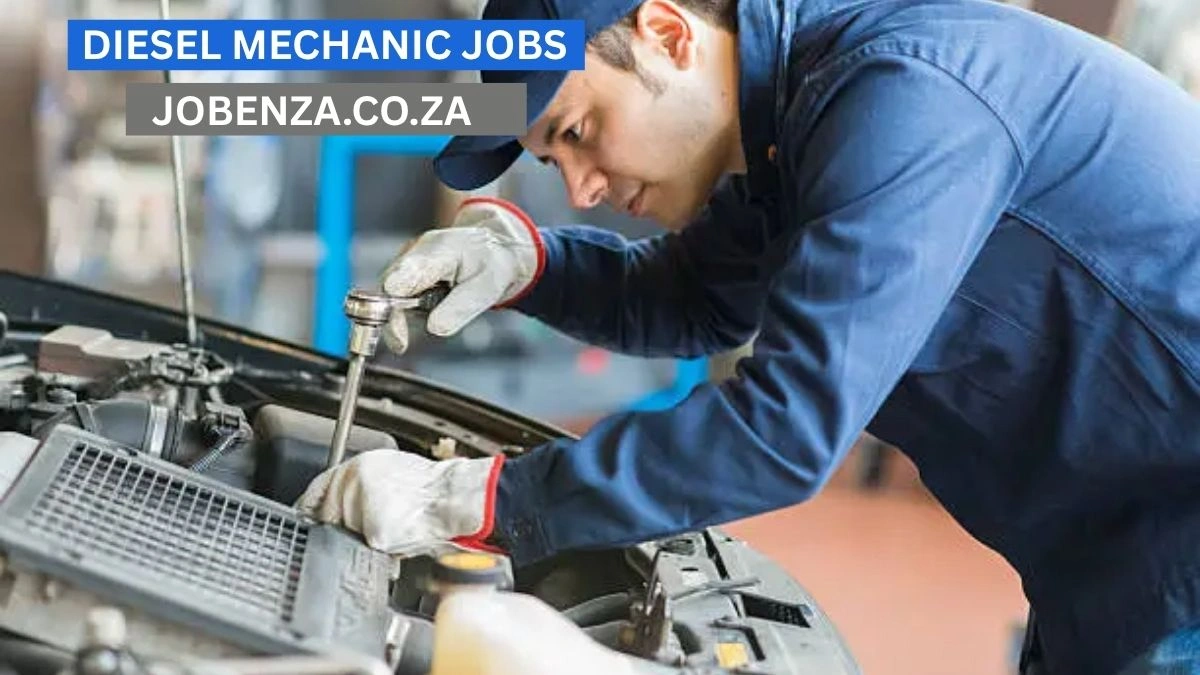
Every loaded super link climbing Van Reenen’s Pass, every 100-tonne haul truck working a Mpumalanga coal face, and every reefer unit protecting a container of Cape citrus depends on one thing that has nothing to do with the driver — a qualified artisan who keeps the engine alive. That is why diesel mechanic jobs sit among the most stubbornly under-supplied roles on South Africa’s employment market. The country is producing far fewer trade-tested artisans each year than its transport, mining, agriculture and construction sectors need to absorb, and fleet operators feel it every time a breakdown puts a R2.5 million rig on the side of the N3. If you hold a Red Seal — or you are working toward one — you are not competing for scarce work. Employers are competing for you. This guide maps the market hub by hub, breaks down every training pathway, and shows you exactly how to convert your skills into a well-paid, upward-moving career.
Section 1: Where the Work Is — A Province-by-Province Market Map
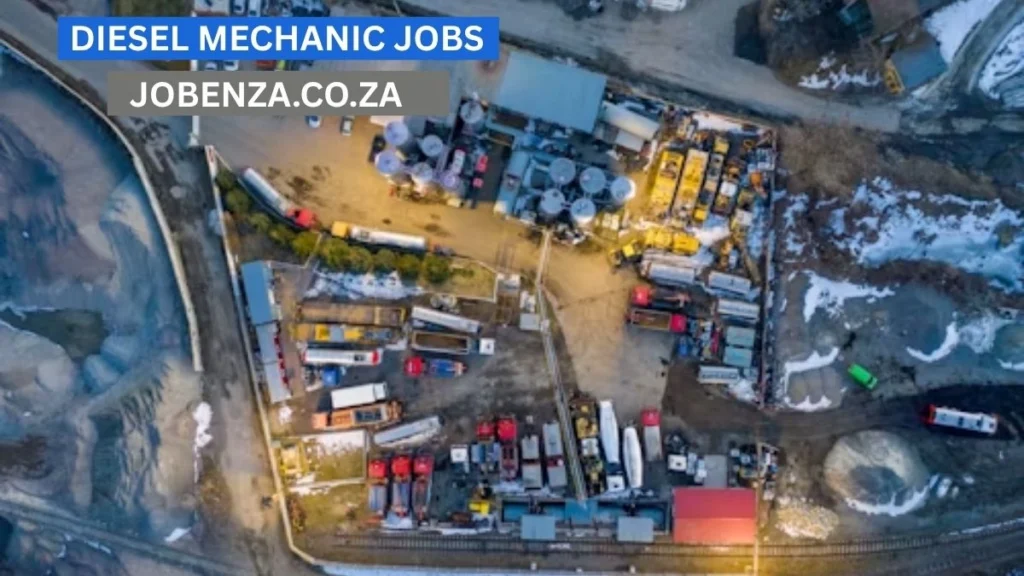
Diesel mechanic jobs exist in every province, but the type of work, the equipment you touch and the money on offer vary enormously by region. Targeting the right hub for your skill set is the single fastest way to raise your earnings.
Gauteng: Fleet Volume and Dealer Networks
Gauteng is the country’s logistics nerve centre, and it generates the highest raw volume of vacancies. The industrial belts of Isando, Kempton Park, Alrode, Wadeville, Roodepoort and Rosslyn are dense with commercial vehicle dealerships, independent workshops and in-house fleet depots.
Typical Gauteng roles include:
- Commercial dealership technicians for Mercedes-Benz Trucks, Scania, Volvo, MAN, Isuzu, UD and FAW
- In-house fleet maintenance jobs at national distribution operators running 100 to 800 vehicles
- Trailer and refrigeration specialists servicing the City Deep and Tambo Springs container corridors
- Generator, forklift and materials-handling technicians across the warehousing sector
Because national fleet head offices are based in Sauteing, this is where heavy vehicle mechanic vacancies are advertised first — often weeks before the same roles surface in coastal markets. Job seekers filtering by province on jobenza.co.za consistently find the highest listing turnover here.
Mpumalanga and Limpopo: Mining Pays the Premium
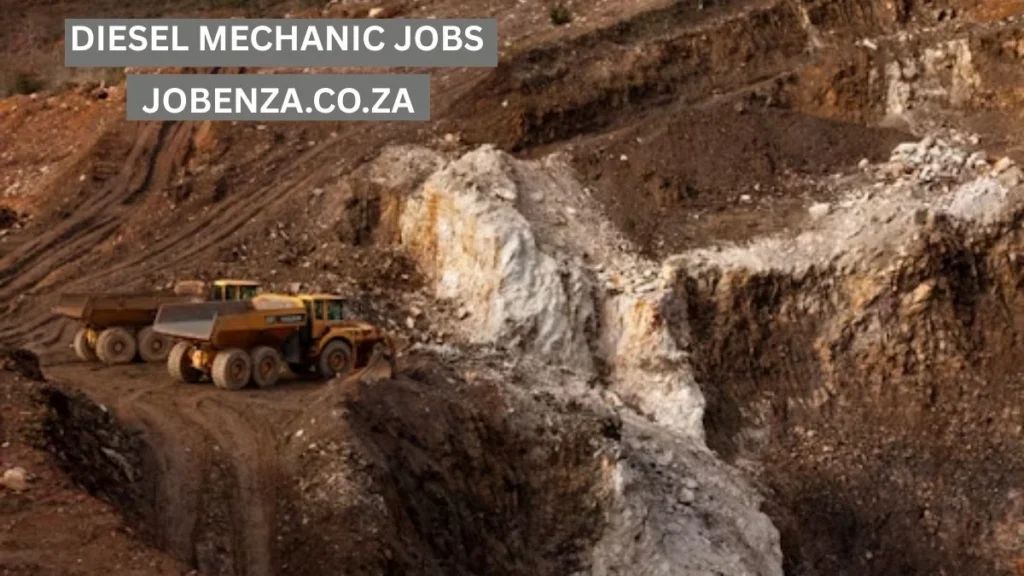
If you want the highest earnings available to a diesel artisan in South Africa, the mining belt is where you go. Witbank, Middelburg, Steelpoort, Lydenburg, Burgersfort and the Waterberg run enormous fleets of earthmoving equipment, and the machinery is orders of magnitude more complex than road transport.
Work in this segment centres on:
- Caterpillar, Komatsu, Bell, Volvo CE and Liebherr yellow-metal equipment
- Articulated dump trucks, excavators, front-end loaders, dozers and graders
- Heavy hydraulic systems operating at extreme pressures
- Component change-outs, planned maintenance shutdowns and field service call-outs
Mine-site roles run on rotational rosters — commonly 14 days on, 7 off — and combine a higher base with living-out allowances, site allowances and substantial overtime. The heavy equipment mechanic requirements here are stricter than anywhere else, as Section 4 sets out.
KwaZulu-Natal: Port Logistics and Sugar
Durban’s port drives constant heavy vehicle movement, and the province supports a deep workshop ecosystem around it. Expect:
- Container haulage fleet workshops in Pinetown, Prospecton and Mobeni
- Reefer and transport refrigeration specialists — a genuinely scarce skill
- Agricultural equipment technicians in the sugar, timber and Midlands farming belts
- Marine and standby generator diesel work around the harbour precinct
Coastal humidity and salt air accelerate corrosion, so KZN employers value technicians who can fault-find electrical systems in wet, corrosive conditions.
Western Cape: Precision, Cold Chain and Agriculture
Cape Town’s diesel workforce skews toward retail distribution fleets, cold-chain transport and the Winelands agricultural sector. Boland and Overberg workshops service tractors, harvesters and irrigation plant, while Epping, Brackenfell and Airport Industria host the bulk of the commercial fleet workshops. South Africa artisan careers in the Cape often trade slightly lower cash compensation for better working conditions and more predictable hours than mining rotations.
Don’t Overlook the Secondary Markets
The Northern Cape’s manganese corridors, the Free State’s agricultural and mining mix, and the Eastern Cape’s automotive cluster around Gqeberha and East London all run persistent shortages. Fewer applicants means less competition — and, in the remote mining areas, noticeably better offers.
Section 2: Qualifications and Training Pathways
There is no shortcut into this trade, but there are several legitimate routes. Understanding which one fits your circumstances will save you years.
The Foundation: Grade 9 to N2
Entry requirements are more accessible than most people assume. merSETA’s Motor and Auto chambers set a minimum entry age of 16 and require roughly Grade 10 with English or Afrikaans, Mathematics and two other subjects — or an N1 with trade theory. The Metal chamber accepts Grade 9 with English or Afrikaans, Maths or Science, plus two other subjects.
What genuinely matters is the four-subject N2 with the relevant trade theory, which is the standard academic requirement before trade testing. Most candidates achieve this at a public TVET college.
Route 1: The Apprenticeship
This remains the strongest pathway because you earn while you learn and finish with employer-verified experience.
- Structure: a formal contract with an employer, registered through merSETA
- Duration: typically three to four years; Motor time-based contracts require a minimum of 85 weeks of practical training, with metal chamber programmes starting at 80 weeks
- Content: rotating workshop exposure across engines, transmissions, hydraulics, electrical and auto-electrical systems, logged in a formal workbook
- Stipend: apprentices and learners commonly earn in the region of R3,000 to R7,000 per month during training
The competitive advantage is significant. Apprenticeship graduates are frequently offered permanent roles by their host employer before they even sit the trade test.
Route 2: TVET College N-Diploma Pathway
Study N1 to N6 at a TVET college, then complete 18 to 24 months of workplace experience to convert N6 into a National N Diploma. This route builds stronger theoretical depth — useful if you plan to move into diagnostics or management — but you must secure your own workplace exposure, which is the hard part.
Route 3: Artisan Recognition of Prior Learning (ARPL)
If you have been working in workshops for years without formal papers, ARPL is designed for you. merSETA’s ARPL process assesses your existing competence, identifies gaps, provides targeted top-up training, and takes you to trade test. Thousands of experienced but uncertified mechanics are sitting on years of practical skill that ARPL can formalise — and formalising it typically produces an immediate step-change in earning power.
The Goal: Red Seal Trade Test Certification
Trade test certification South Africa is the industry’s single most important credential. The trade test is conducted at a merSETA-accredited trade test centre and assesses your practical competence across the full scope of the trade. Pass it, and you are issued a National Trade Test Certificate — the “Red Seal” — and you are legally a qualified artisan.
What the test typically covers:
- Engine strip, measure, assess and rebuild to specification
- Fuel system diagnosis, including modern common-rail
- Hydraulic and pneumatic system fault-finding
- Auto-electrical circuit testing and diagnosis
- Transmission, driveline and differential work
- Correct use of precision measuring instruments
- Safety procedure and workshop practice
The Red Seal is nationally recognised, portable across every sector, and widely accepted abroad — which is precisely why it is the dividing line between R18,000 and R40,000 a month. Career resources on jobenza.co.za cover accredited training providers and trade test preparation for candidates working through this stage.
Section 3: What the Job Actually Involves
Job adverts describe duties vaguely. Here is the real shape of the work — and knowing it in detail is what makes you sound credible in an interview.
Diagnostic Troubleshooting
Modern diesel engines are computer-managed, and diagnosis has shifted from mechanical intuition to structured electronic fault-finding. Day to day this means:
- Connecting manufacturer diagnostic software — Cummins INSITE, CAT ET, Volvo Tech Tool, Scania SDP3, Detroit Diagnostic Link
- Reading and correctly interpreting fault codes rather than simply clearing them
- Live data analysis: rail pressure, boost, EGT, injector correction values
- Electrical circuit testing with a multimeter and oscilloscope
- Compression and cylinder leak-down testing
Employers value the mechanic who finds the root cause over the one who replaces parts until the light goes out. Diagnostic ability is the fastest-appreciating skill in diesel technician employment right now.
Engine Overhauls
Full rebuilds remain core work, especially in mining and long-haul fleets:
- Complete strip-down, cleaning and crack-testing of components
- Precision measurement of bores, journals, clearances and end float
- Machining coordination — reboring, crank grinding, head skimming
- Reassembly to exact torque specifications and sequences
- Timing, valve clearance setting and injector calibration
- Controlled run-in and dynamometer verification
Hydraulic System Repairs
For anyone in yellow metal, hydraulics are half the job — cylinders, pumps, motors, control valves, hose replacement, contamination control and pressure testing to specification. Hydraulic competence is a major differentiator and directly unlocks the higher-paying mining roles.
Preventative Maintenance
The unglamorous work that keeps fleets profitable and keeps you employed:
- Scheduled service intervals based on hours or kilometres
- Oil sampling and analysis to catch wear before failure
- Brake, suspension and steering inspection
- Roadworthy preparation and compliance documentation
- Accurate job card completion and parts recording
Fleet maintenance jobs live or die on documentation discipline. Workshop managers promote the technician whose job cards are complete and legible, because that is who they trust with warranty claims and audits.
Field Service and Breakdowns
Many roles include call-out duty — attending roadside or on-site failures with a service vehicle, diagnosing under pressure with limited tooling, and deciding quickly whether to repair in place or recover. Field service typically carries a standby allowance and is where mechanics build their reputation fastest.
Section 4: What Employers Actually Require
Your Toolset
South African workshops generally expect qualified artisans to own a personal set of hand tools. Employers supply specialist and heavy equipment, but you are expected to arrive with:
- Metric and imperial socket sets in 1/4″, 3/8″ and 1/2″ drive
- Combination spanners, ring spanners and a torque wrench
- Screwdrivers, pliers, side cutters, punches and chisels
- Feeler gauges, vernier calipers and a micrometer set
- A multimeter and basic test lamp
- A lockable roller cabinet or tool chest
Budget R15,000 to R40,000 to build a credible set over time. Buy quality progressively rather than a cheap complete kit — foremen notice.
Driver’s Licence — Code 10 or Code 14
This is the requirement that quietly disqualifies more applicants than any other. Most heavy vehicle mechanic vacancies specify at least a Code 10 (C1) licence, because you must be able to road-test the vehicles you repair. Fleet and field service roles frequently require a Code 14 (EC) plus a valid PrDP. If you are Red Seal qualified but hold only a Code 8, upgrading your licence is the highest-return investment available to you — it can add several thousand rand a month to your market value almost immediately.
Physical Capability
The work is genuinely demanding: extended periods standing, kneeling and working overhead, lifting components, working in pits and confined spaces, and tolerating heat, noise and weather. Most employers require a pre-employment medical, and mine sites require a full statutory medical including audiometry, spirometry and vision testing before you may enter site.
Safety Certifications
The heavy equipment mechanic requirements for mining and industrial sites go well beyond the trade certificate. Expect to need some combination of:
- Mine site induction and Mine Health and Safety Act awareness
- Working at heights certification
- Confined space entry
- Hazardous energy isolation and lock-out/tag-out
- Overhead crane and rigging or slinging
- Forklift operator licence
- First aid and fire fighting
- Gas welding and cutting competence
Each certificate widens the range of vacancies you qualify for. On jobenza.co.za, read the certification lines in mining adverts closely — they are screening criteria, not preferences.
Section 5: Salaries, Overtime and Career Progression
What the Market Pays in 2026
Compensation varies widely by qualification, sector and location. Indicative monthly bands:
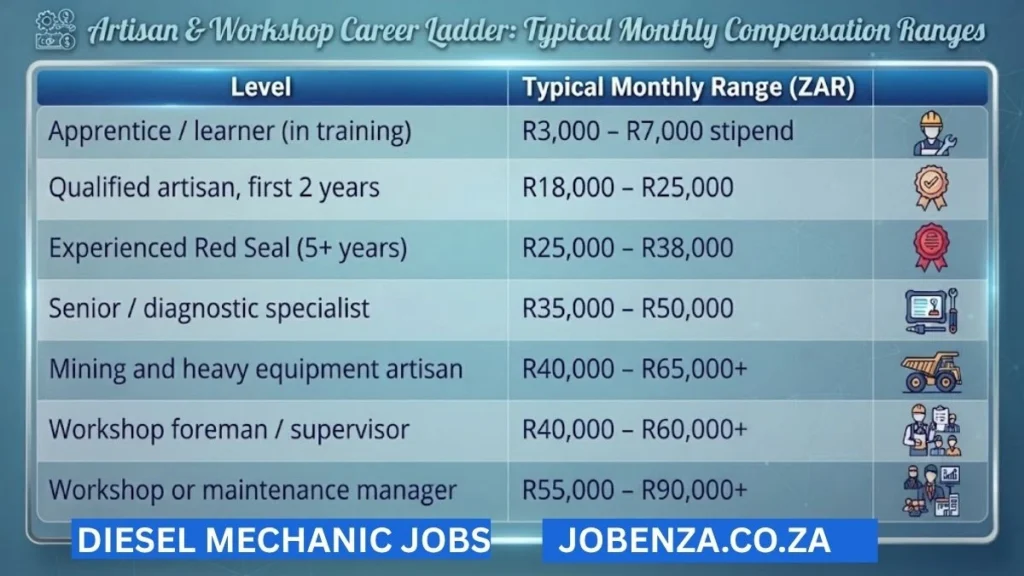
Published surveys place the qualified-artisan average around R240,000 to R300,000 a year, with senior and specialised roles reaching R360,000 to R420,000 and above. Mining sits at the top of that distribution.
Overtime and Allowances Change Everything
Base salary alone badly understates earnings in this trade:
- Overtime: normally 1.5× on weekdays and Saturdays, 2× on Sundays and public holidays. Breakdown-heavy fleet environments can add 20–40% to gross pay.
- Standby allowance: a weekly retainer for after-hours availability, plus call-out pay per incident
- Shift and night allowances: common in 24-hour fleet workshops
- Site and living-out allowances: substantial in mining, often R4,000–R12,000 a month
- Rotational travel: flights or fuel to and from site on remote contracts
- Tool allowance: an annual contribution toward replacing personal tooling
- Performance bonuses: tied to workshop efficiency, comeback rates and fleet availability
Always compare total packages, not basic salaries. A R28,000 base with strong overtime and a living-out allowance will out-earn a R35,000 base with neither.
The Progression Ladder
Diesel mechanic jobs are the entry point to a long ladder, not a terminal role:
- Apprentice → building logged practical hours
- Qualified artisan → Red Seal in hand, core earning years begin
- Senior artisan / specialist → diagnostics, hydraulics, auto-electrical or a specific OEM brand
- Team leader / charge hand → running a bay and mentoring apprentices
- Workshop foreman → allocating work, quality control, customer liaison
- Workshop manager → full P&L, staffing and productivity responsibility
- Fleet or maintenance manager → multi-site asset strategy, budgeting and compliance
Workshop supervisor careers typically open around the seven-to-ten-year mark and reward a very different skill mix — scheduling, costing, warranty administration, people management. Artisans who add a supervisory or maintenance management qualification while still on the tools reach that step several years earlier than those who wait to be noticed.
The lateral market is strong too: OEM technical trainer, field service engineer, warranty assessor, technical sales, and independent workshop owner. And because the Red Seal is internationally respected, South African diesel artisans remain in demand across Australia, Canada and the Gulf.
Section 6: How to Land the Job
Build a CV That Passes the First Screen
Workshop managers scan applications in seconds. Front-load your qualifications:
- Header: name, contact number, city, then immediately — “Red Seal Qualified Diesel Mechanic | Trade Test [year] | Code 14 with PrDP”
- Qualifications block: trade test certificate number and date, N-level completed, apprenticeship employer and dates
- Certifications block: every safety ticket with its expiry date
- Experience block: for each role, state the equipment brands, the systems you worked on, and the type of workshop. “Serviced trucks” says nothing. “Cummins ISX and Detroit DD15 engines, full overhauls and common-rail diagnostics, 45-vehicle long-haul fleet, 4 years” says everything.
- Diagnostic software: list every platform you can operate by name — this is a genuine screening filter
- References: two contactable foremen or workshop managers, permission secured in advance
Keep it to two pages. Attach clean PDF scans of your trade certificate, licence, ID and safety tickets.
Prepare for the Practical Assessment
Almost every serious employer runs a practical trade test before hiring. Assessors typically evaluate:
- A measuring exercise — micrometer and vernier readings taken and recorded accurately
- A fault-finding task — an introduced electrical or fuel fault to diagnose logically
- A strip and assemble task — commonly a cylinder head or injector pump, to torque spec
- A hydraulic task — pressure testing or component identification
- Written theory — engine principles, torque, hydraulics, safety
Three things separate passes from failures: narrate your reasoning aloud, because assessors score process and not just outcome; observe every safety step even when it feels slow, since skipping isolation or PPE is an instant fail; and keep your bench organised, because tidiness reads as professional discipline.
Search Where the Listings Are Verified
Applying to fifty scraped, expired adverts is worse than applying to eight verified ones. jobenza.co.za is built for exactly this problem: verified South African engineering and artisan vacancies, filtering by province and trade, direct application without agency middlemen, and career advisory content written for this market. Create a profile, upload your document pack once, and apply in minutes instead of hours.
Practical search discipline: check your filters daily because good workshop roles fill in under a week, apply within 48 hours of a listing appearing, tailor your opening line to the equipment named in the advert, follow up once after five working days, and keep a simple spreadsheet of applications and outcomes.
Section 7: Your Next Move Starts Now
South Africa is not producing enough trade-tested diesel artisans to meet the demands of its mines, its fleets, its farms and its construction sector — and that shortage is structural, not cyclical. It is not going to correct itself in the next five years. That imbalance is your leverage, whether you are an apprentice finishing your logbook, an experienced hand finally formalising your skills through ARPL, or a Red Seal artisan ready to move into diagnostics, mining or supervision.
Your action plan for this week:
- Audit your credentials. Trade certificate, N-level, licence code, PrDP, and every safety ticket with its expiry date. Renew anything lapsing within six months.
- Close your biggest gap. For most candidates that is either the Code 14 licence upgrade or a missing safety certification — both are fast, affordable wins.
- Rebuild your CV using the qualification-forward structure above, naming equipment brands and diagnostic platforms explicitly.
- Digitise your document pack as clear PDF scans.
- Register on jobenza.co.za, set your province and trade filters, and apply consistently.
jobenza.co.za exists so that South African job seekers spend their time applying rather than sifting through dead links. Active diesel mechanic jobs, fleet maintenance jobs and mining artisan roles are posted across Gauteng, Mpumalanga, KwaZulu-Natal, the Western Cape and the mining corridors, alongside practical guidance on trade testing, licensing and salary benchmarking.
You have already done the hard part — the years on the tools and the certificate that proves it. Now go and get the role that pays what it is worth.
Visit jobenza.co.za today to browse verified artisan and diesel mechanic listings, and fast-track your engineering career.