


South Africa’s gig economy has quietly become one of the fastest-growing segments of the local labor market. With unemployment still hovering above 30%, thousands of skilled professionals are turning their backs on the traditional 9-to-5 and building income streams through freelance jobs in South Africa instead. This guide skips the fluff and gets straight into what actually works in 2026: where to find real paying clients, how to handle SARS without losing sleep, and which skills are currently commanding premium rates from Cape Town to Johannesburg.
If you’ve been searching for freelance jobs in South Africa and only found recycled advice about “finding your niche,” this is different. Below is a practical playbook built for the realities of the South African market, including load shedding, rand volatility, and local client expectations.
Section 1: Where to Find Freelance Work in South Africa

The biggest mistake new freelancers make is applying only on one platform. Diversifying across local and global marketplaces protects your income when one market slows down.
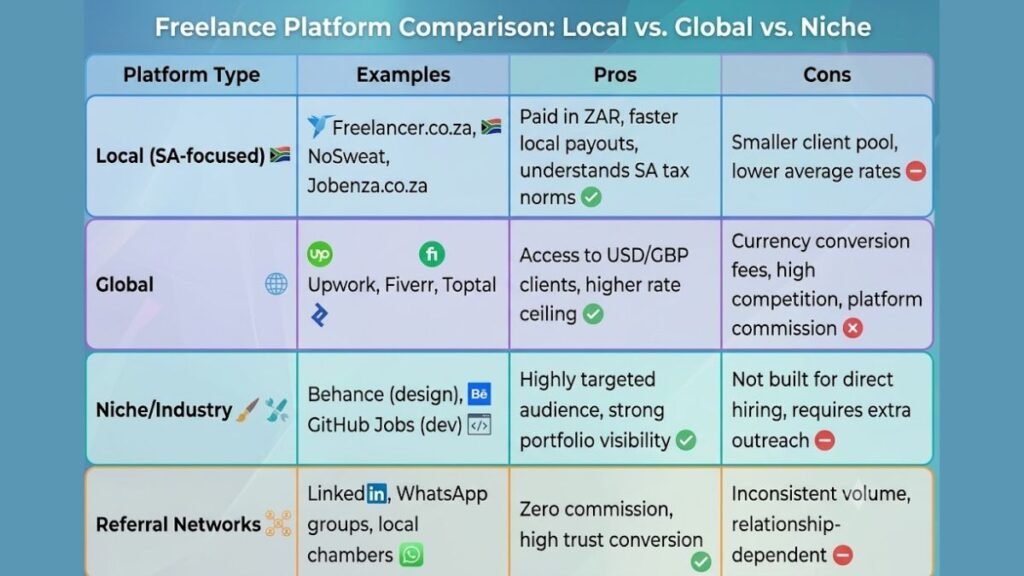
Local platforms understand South African pricing norms and pay in rand, which removes currency conversion headaches. Global platforms open the door to dollar and pound-denominated income, which can be lucrative given exchange rates.
Pro-Tip Box: Platform Strategy
Register on at least one local and one global platform simultaneously. This spreads risk and lets you compare which market values your skill more highly.
Networking still outperforms cold applications in South Africa. Facebook groups like “Digital Nomads South Africa” and LinkedIn communities in Johannesburg and Cape Town generate consistent referral work.
Local business chambers and coworking spaces, such as those in Woodstock (Cape Town) or Rosebank (Johannesburg), are goldmines for freelance Online jobs in South Africa that never get advertised publicly.
Comparison Table: Local vs Global Freelance Platforms
Pro-Tip Box: Avoid Platform Dependency
Never let one client or one platform represent more than 40% of your monthly income. If that platform changes its algorithm or fee structure, your entire income shouldn’t collapse overnight.
Section 2: Financial Survival — SARS, Invoicing, and Banking in ZAR
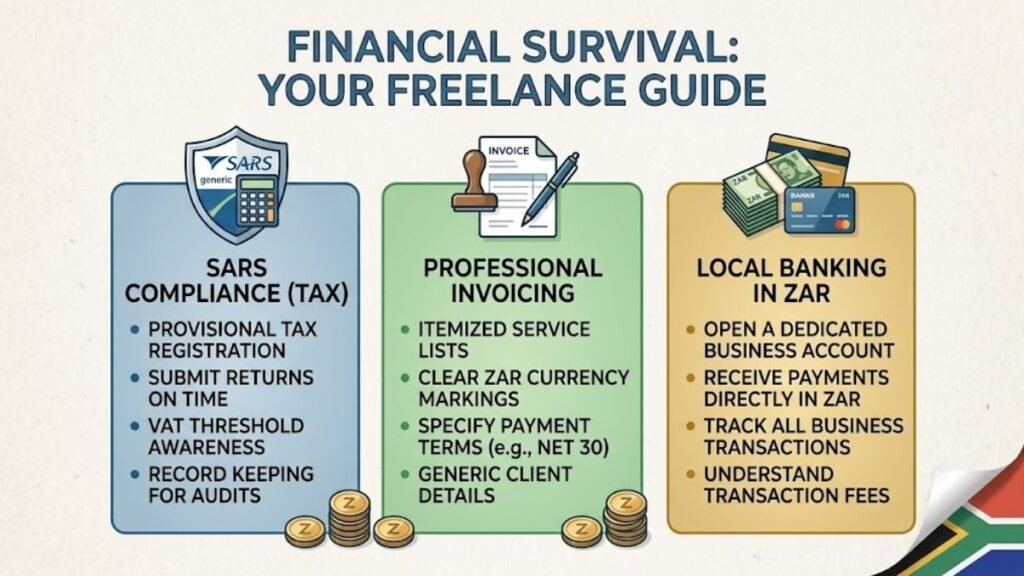
This is the section most freelance guides skip, and it’s exactly where South African freelancers get caught out. Getting your tax and banking right from day one saves enormous stress later.
How to Register as a Freelancer with SARS
Freelancers in South Africa are classified as sole proprietors unless they register a separate company. You are legally required to register for freelance tax SARS South Africa purposes once your income exceeds the tax threshold, currently around R95,750 per year for those under 65.
Start by registering as a provisional taxpayer on SARS eFiling. This status applies to anyone earning income outside of a standard payroll, including all freelancers and consultants.
Provisional tax is paid twice a year, in August and February, based on estimated annual income. Missing these deadlines results in penalties and interest, so calendar reminders are essential.
Keep a running spreadsheet of every invoice issued and every expense incurred. SARS accepts deductions for home office costs, a portion of your internet and electricity, and equipment used solely for work.
Pro-Tip Box: SARS Registration Checklist
Register for eFiling, select “provisional taxpayer” status, keep three years of bank statements, and separate your business and personal banking from the start. This single habit prevents 90% of freelancer tax headaches.
If your annual turnover exceeds R1 million, VAT registration becomes compulsory. Many freelancers voluntarily register earlier because it allows them to claim VAT back on business expenses.
Invoice Best Practices in ZAR
Every invoice should include your full name or business name, your SARS tax number if registered, an invoice number, and clear banking details. Vague invoices are the leading cause of late payments in South Africa.
Always quote and invoice in ZAR for local clients, even if the final conversation started in dollars. This avoids disputes when the exchange rate shifts between the quote date and the payment date.
For international clients paying into a South African account, use services like Wise or Payoneer rather than standard SWIFT transfers. Standard bank transfers often carry hidden conversion fees of 3-5%, which quietly erodes your income.
Pro-Tip Box: Getting Paid Faster
Add a clause stating “payment due within 7 days” directly on the invoice, and always request a 30-50% deposit before starting large projects. Late payment is the single biggest complaint among freelance jobs in South Africa communities online.
Banking in ZAR also means watching for card skimming and fraud on business accounts. Use a dedicated business cheque or savings account, and enable transaction notifications for every deposit.
Section 3: Skill Sets in Demand for 2026
Certain sectors are quietly booming for remote freelance jobs and on-site contract work alike. Understanding where demand is highest helps you position your rates competitively.
IT and Software Development
Development, cybersecurity, and cloud migration skills remain the highest-paying freelance categories in South Africa. Companies in Cape Town’s tech corridor are increasingly outsourcing entire product builds to freelance teams instead of hiring full-time staff.
Design and Creative Services
Branding, UI/UX, and video editing continue to see strong demand from South African SMEs building their digital presence. Bilingual designers who can produce content in English and Afrikaans, or English and Zulu, often command a premium.
Construction
Freelance quantity surveyors, project managers, and CAD drafters are increasingly hired on a contract basis as construction firms manage cash flow tightly. Short-term site supervision contracts have grown significantly in Gauteng’s infrastructure projects.
Pro-Tip Box: Construction Freelancers
Get listed with the South African Council for the Project and Construction Management Professions (SACPCMP) if applicable. Certification dramatically increases trust with contractors hiring short-term freelance jobs in South Africa’s building sector.
Agriculture
AgriTech consulting, drone-based crop surveying, and freelance agronomy advice are trending hard in the Western Cape and Mpumalanga farming belts. Farms are increasingly hiring freelance data analysts to interpret yield and irrigation data rather than employing full-time specialists.
Pro-Tip Box: Agriculture Freelancers
Partner with local agricultural cooperatives to access multiple farms through a single relationship. One strong reference from a recognised co-op can open doors across an entire region.
Section 4: Portfolio Secrets for Local Clients
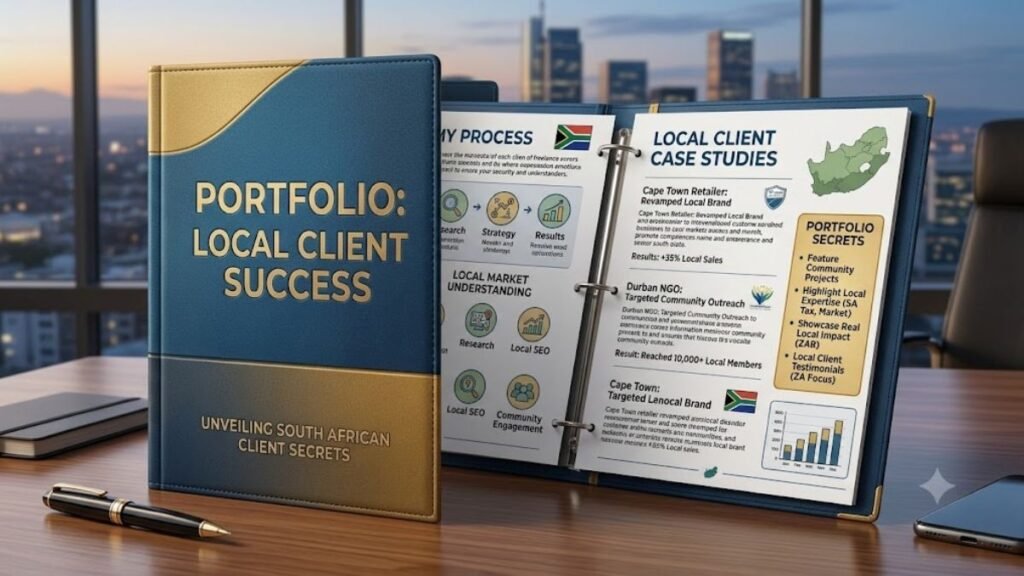
South African clients respond differently to portfolios than international clients do. Trust and local relevance matter more than flashy design.
Include at least two case studies featuring South African businesses, even small ones, because local clients want proof you understand local context. A portfolio full of only international logos can feel disconnected to a Durban-based SME owner.
Show pricing transparency somewhere on your portfolio or website. South African clients frequently complain that freelancers “hide behind quotes,” so a visible starting rate builds immediate trust.
Pro-Tip Box: The Testimonial Trick
Request a short video testimonial, even 15 seconds long, from every satisfied local client. Video testimonials convert significantly better than written reviews for South African audiences who are wary of fake text reviews.
Keep your portfolio mobile-optimised. Many South African decision-makers, especially in construction and agriculture, review freelancer portfolios directly from their phones while on-site.
Section 5: Legal Pitfalls to Avoid
Verbal agreements are the single biggest legal risk facing freelance jobs in South Africa today. Always convert conversations into a written scope of work before starting, even for small projects.
Include a clear cancellation clause in every contract, specifying what happens if a client cancels after work has begun. Without this, freelancers frequently do unpaid work when projects are cancelled midway.
Protect your intellectual property by stating clearly when ownership transfers to the client, ideally only after final payment clears. This single clause prevents clients from using unpaid work.
Pro-Tip Box: Contract Essentials
Every contract should include scope, payment terms, cancellation terms, and an IP ownership clause. A simple one-page agreement is far better than no agreement at all.
Be cautious of clients who insist on paying only after “final approval” with no milestone payments. This structure is a common red flag for non-payment disputes reported in South African freelance forums.
Frequently Asked Questions
Is freelancing legal without registering a company in South Africa?
Yes, you can freelance as a sole proprietor without registering a formal company, but you must still register with SARS for freelance tax South Africa purposes once you exceed the tax threshold.
What are the top freelance websites South Africa freelancers should use in 2026?
A mix of local and global platforms works best, including Freelancer.co.za and NoSweat locally, alongside Upwork and Fiverr for global reach.
How do I find freelance clients in SA without a big network?
Start with LinkedIn outreach targeting local business owners, join regional Facebook freelance groups, and attend coworking space networking events in your city.
Can I get remote freelance jobs paying in US dollars while living in South Africa?
Yes, many South Africans successfully secure remote freelance jobs from US and European clients, typically using Upwork, Toptal, or direct outreach, and receiving payment via Wise or Payoneer.
Do I need to charge VAT as a freelancer in South Africa?
Only if your annual turnover exceeds R1 million, though voluntary VAT registration is sometimes beneficial for freelancers with high business expenses.
Conclusion
The freelance jobs in South Africa market rewards those who treat it like a real business, not a side hustle. Getting your SARS registration right, diversifying across local and global platforms, and building a locally-relevant portfolio will put you ahead of most competitors in your field.
2026 belongs to freelancers who move fast, price transparently, and protect themselves with proper contracts. Ready to find your next opportunity? Browse the latest verified freelance jobs in South Africa on Jobenza.co.za today and take the next step toward real income independence.